
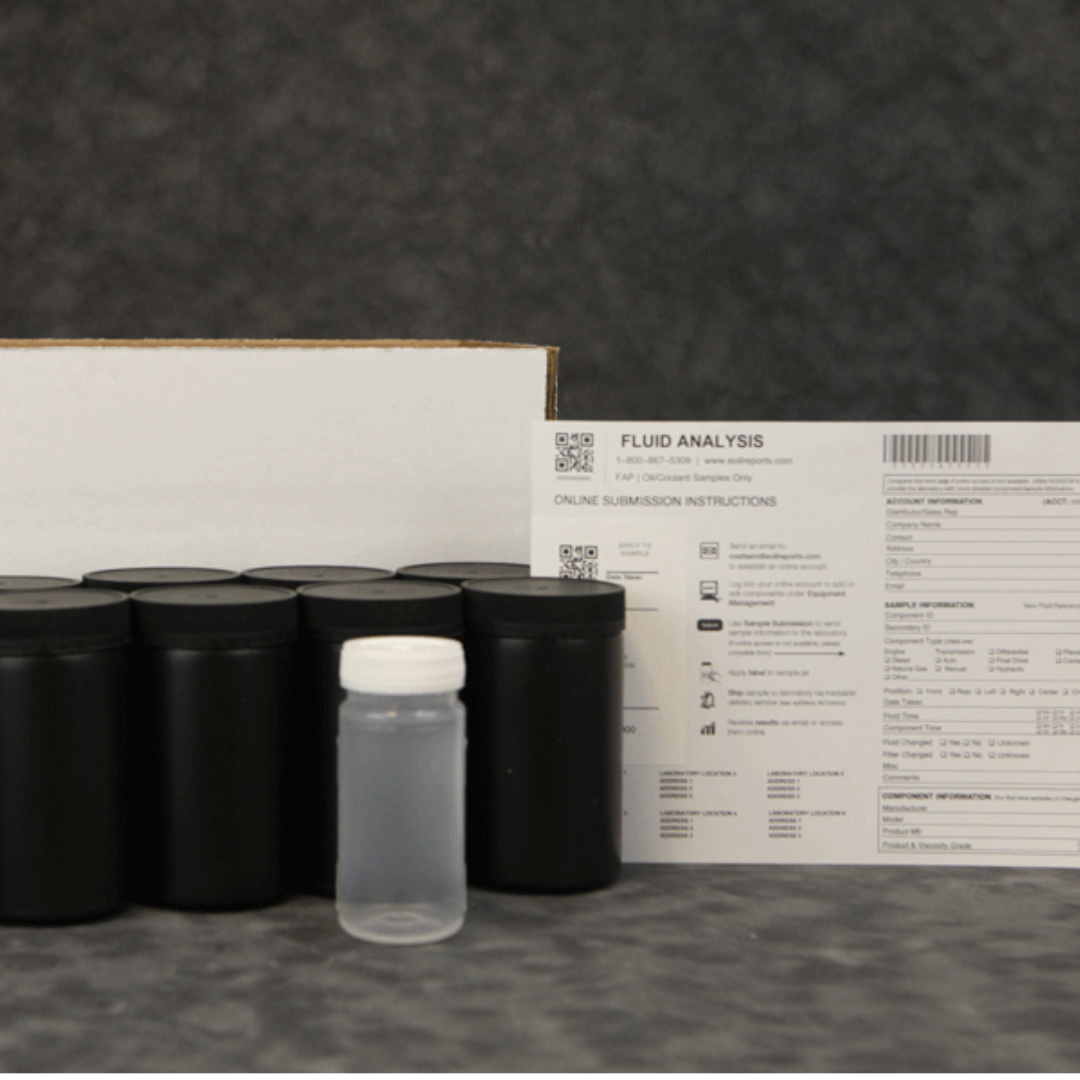

Our Fluid Sampling Kits from OneHydraulics provide a simple, reliable way to check the health of your hydraulic or lubrication systems. Each kit includes everything needed to collect and send an oil sample for complete laboratory analysis—sample jar, and integrated label. The lab tests evaluate vital indicators such as acid number, metal content, water contamination, viscosity, particle count (ISO 4406), oxidation, and nitration levels. These measurements help identify early signs of wear, contamination, or fluid breakdown so maintenance teams can take corrective action before costly failures occur. Perfect for preventative maintenance programs, OneHydraulics fluid sampling kits make monitoring system performance easy, accurate, and cost-effective.
Please call for pricing on 10+ bottle samples.
Cost of each kit includes:
- (1) 3oz sample jar – for collecting the sample
- (1) integrated label – for writing identifying information on the sample (for example, the machine number)
- (1) Complete Oil Analysis including:
* Acid Number – Determines how much acid is present in the oil as a result of the oxidation process. The higher the acid number, the higher the degradation level of the oil.
* Elemental Metals Analysis – Determines if there are metal fragments in your oil, which may be an indication of excessive wearing of metal components, which could lead to catastrophic failure.
* Water Ingression – Determines if water is suspended in the oil, which could lead to corrosion of metal components; if initial testing indicate there is no water in the oil, this more in-depth testing may not be required.
* Viscosity at 40° C or 100° C, depending on fluid grade – Determines if the viscosity of the oil is altered at increased temperatures, altering the effectiveness of lubricious properties.
* Particle Count per ISO 4406 – Determines level of particles or contamination in the hydraulic fluid.
* Oxidation – Determines the chemical union of oil and oxygen, which can decrease the stability of hydraulic fluids and form acids that increase viscosity and cause corrosion, as well as create sludge and varnish on hydraulic components leading to sluggish operation, increased wear, reduced clearances, and plugging of lines and valves.
* Nitration – Determines the reaction of the oil with combustion byproducts of nitrogen. Nitration is an indication of a thermal breakdown of the oil, which may occur when the oil comes into contact with extremely hot surfaces, or where excessive aeration occurs.