


WARNING: This product can expose you to chemicals which are known to the State of California to cause cancer, birth defects, or other reproductive harm. For more information go to www.P65Warnings.ca.gov.
Product Details
| Data Sheet | |
|---|---|
| Usually Ships Within | 4-6 Weeks |
| Factory Location | Huntersville, North Carolina |
| Material | Carbon Steel |
| Valve Type | Relief |
| Adjustment Type | Leakproof hex. socket screw |
| Type | Cartridge |
| Pressure Rating | 5075 |
| Inlet Flow Rate | 25 |
| Pressure Range | 58-800psi (400psi Standard) |
| Series | CRP-10A |
| Cartridge Cavity | T-10A |
| Country of Manufacture | China |
| Height | 0.875 |
| Length | 2.32 |
| Width | 0.875 |
| Weight | 0.2 |
Description
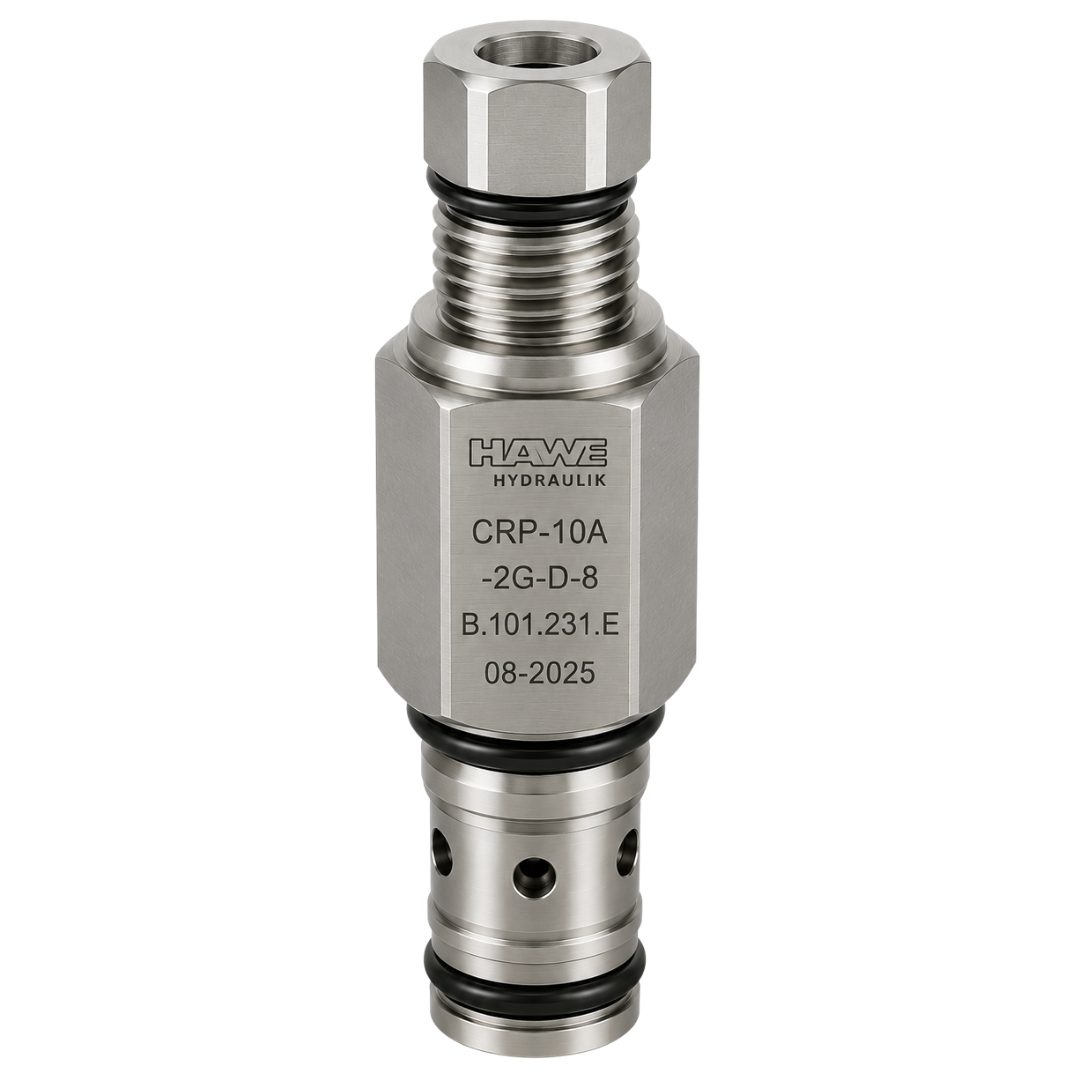
The HAWE CRP-10A Relief Valve is a pilot-operated, balanced poppet hydraulic cartridge relief valve engineered to provide smooth, stable, and highly reliable pressure control in demanding hydraulic systems. Designed for mobile and industrial fluid power applications, the CRP-10A series helps protect pumps, actuators, manifolds, hoses, and hydraulic circuits from damaging overpressure conditions while reducing pressure instability, cavitation, and hydraulic noise in high pressure-drop applications.
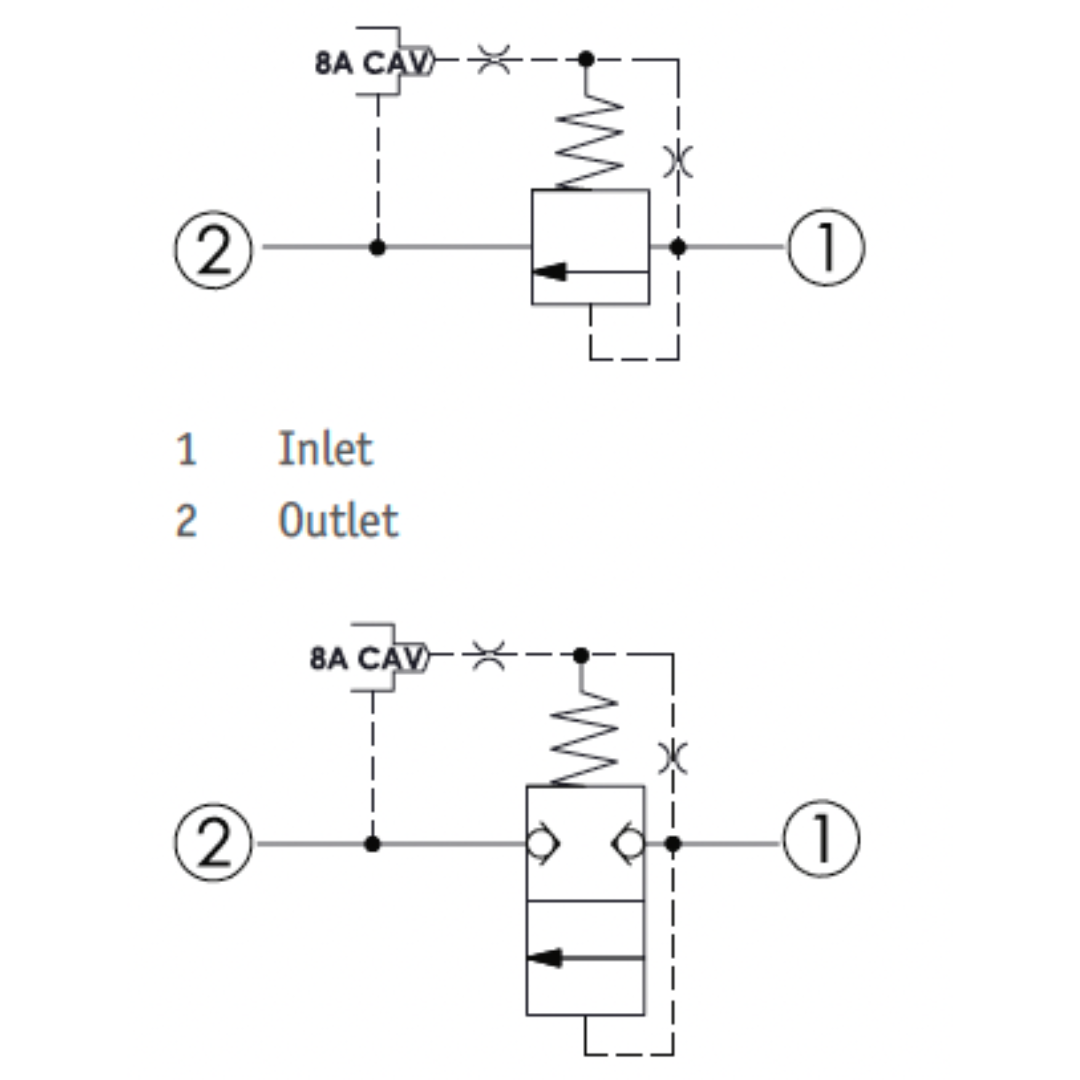
Featuring a balanced poppet main stage with an integral 8A control cavity, the CRP-10A valve delivers operating pressures up to 350 bar (5,076 psi), flow capacities up to 95 L/min, low leakage performance, and fast response times for precise and dependable hydraulic system protection. The compact T-10A cavity design allows flexible integration into hydraulic manifolds, power units, cross-port relief circuits, and custom fluid power systems requiring pilot-operated pressure control and improved pressure stability. Available with multiple spring configurations for varying minimum control pressure requirements, the HAWE CRP-10A series is ideal for applications where high pressure differentials could otherwise create cavitation, manifold erosion, or excessive hydraulic noise.
Warning: Improper valve selection, pressure adjustment, installation, or hydraulic system integration may result in uncontrolled pressure conditions, cavitation damage, equipment failure, serious injury, or death. Always verify compatibility with the intended hydraulic system, follow manufacturer installation torque specifications, ensure correct pilot and pressure settings, and adhere to all hydraulic safety procedures before operation.
- Opens in a new window.